TikTok Ads vs Google Ads: 9 Important Differences Every Advertiser Should Know
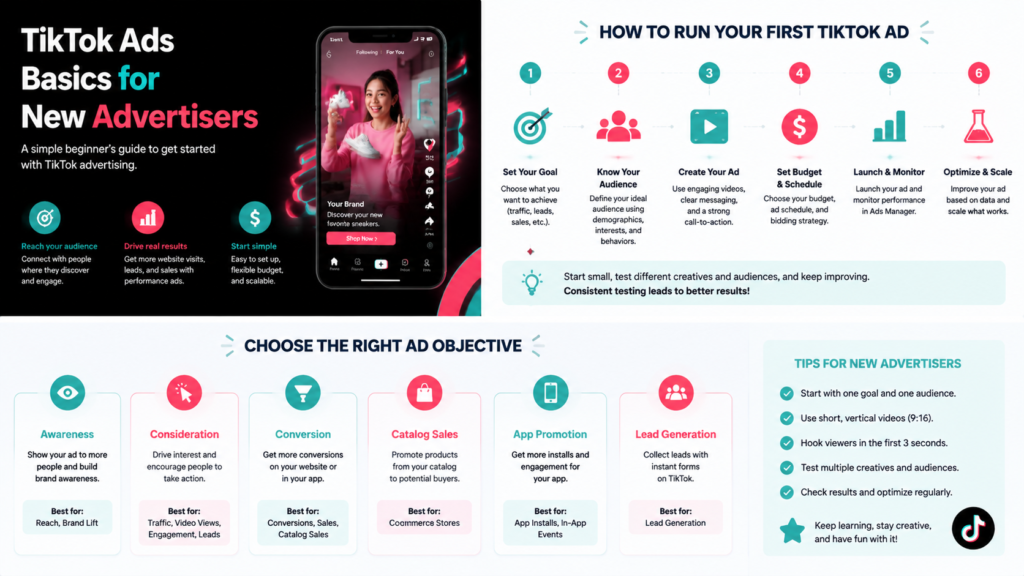
For businesses exploring digital advertising, deciding between TikTok Ads vs Google Ads can feel overwhelming. Both platforms offer unique advantages, but they cater to different audiences, ad formats, and marketing strategies. Understanding these differences is key to maximizing your advertising ROI and reaching your target customers effectively.
1. Audience Demographics
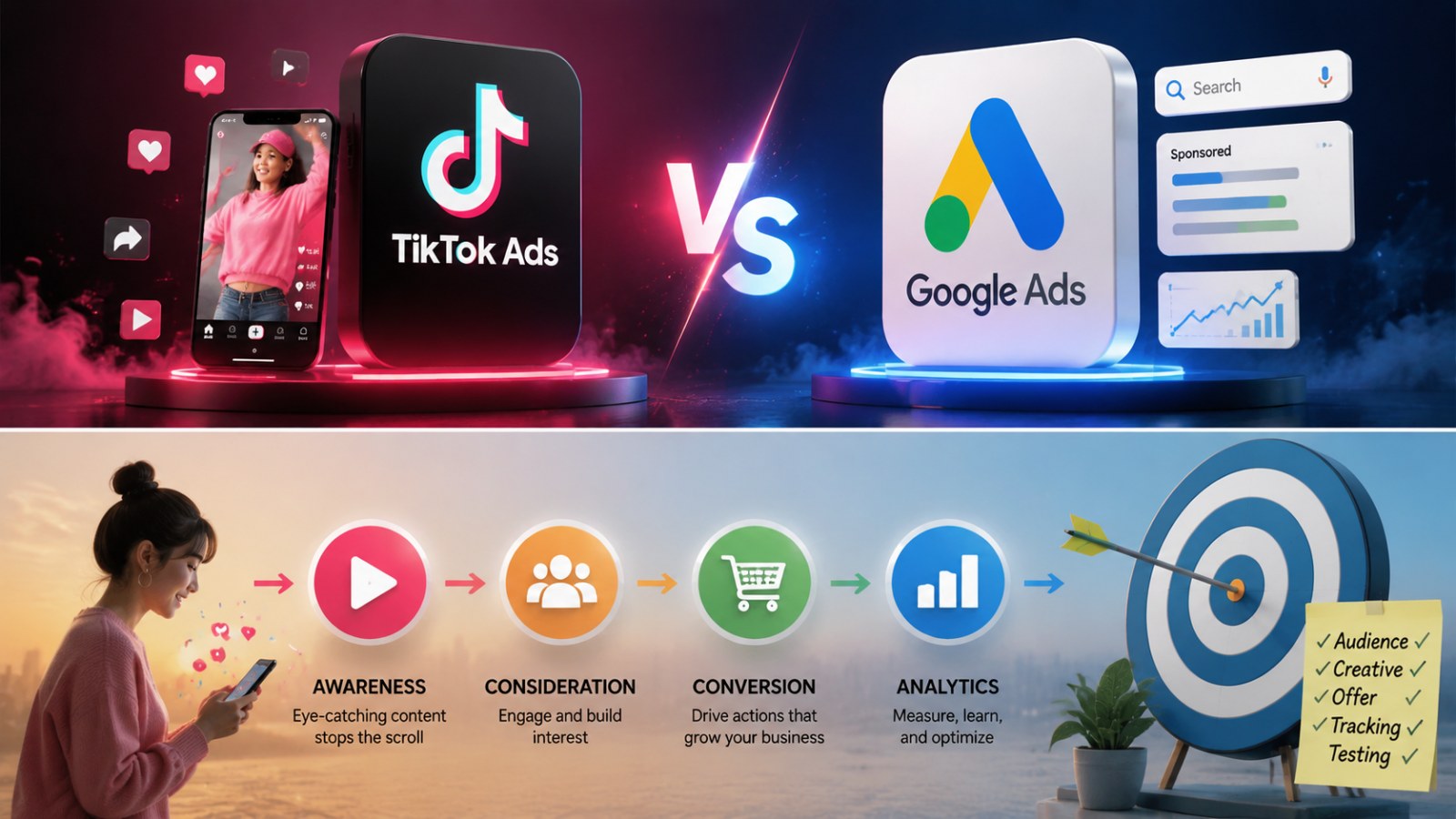
TikTok Ads attract a younger, highly engaged audience, mostly under 35, who spend a significant amount of time consuming short-form video content. On the other hand, Google Ads reach a broader demographic with users actively searching for products or services, often spanning all age groups. If your goal is brand awareness among younger consumers, TikTok might be the better option. For intent-driven conversions, Google Ads can deliver higher efficiency.
2. Ad Formats and Creativity
TikTok relies on short-form video ads that blend seamlessly with organic content, encouraging creativity and storytelling. Ad formats include In-Feed Ads, Branded Hashtag Challenges, and TopView placements. Google Ads primarily offers text-based search ads, display ads, and video ads on YouTube. The creative approach on TikTok demands dynamic visuals, while Google Ads focuses more on keywords and targeting strategies.
3. Targeting Capabilities
Google Ads provides highly advanced targeting options including keywords, location, device type, interests, demographics, and remarketing. TikTok Ads also offers targeting but leans more on behavioral and interest-based data along with custom audiences. Leveraging both platforms effectively depends on understanding the nuances of each targeting system.
4. Cost and Bidding Models
Cost structures differ significantly. Google Ads uses cost-per-click (CPC), cost-per-thousand impressions (CPM), and cost-per-acquisition (CPA) models, often requiring competitive bids for high-traffic keywords. TikTok Ads typically operate on CPM, CPC, and cost-per-view (CPV) models. Generally, TikTok Ads can be more cost-effective for smaller campaigns and testing new creative ideas, while Google Ads may incur higher costs for competitive search terms.
5. Campaign Objectives
Both platforms offer flexible campaign objectives, but with different focuses. TikTok Ads are excellent for brand awareness, engagement, and conversions within a visually-driven environment. Google Ads excels at intent-based objectives, such as driving traffic, generating leads, or increasing online sales through keyword targeting. Knowing your marketing goal is critical when choosing between TikTok Ads vs Google Ads.
6. Learning Curve and Management
For beginners, TikTok Ads can be slightly easier to start with due to its simpler interface and creative-first approach. Resources like TikTok Ads for Beginners and What to Prepare Before Starting TikTok Ads provide actionable guidance. Google Ads may require deeper knowledge of keyword research, bidding strategies, and analytics.
7. Analytics and Reporting
Google Ads offers comprehensive reporting and analytics tools, including conversion tracking, search term insights, and audience segmentation. TikTok Ads provides detailed metrics as well, but emphasizes engagement metrics like views, shares, and click-through rates. For data-driven advertisers, Google Ads allows for precise measurement of ROI, whereas TikTok Ads shines in performance insights related to creative engagement.
8. User Intent and Journey
Users on Google often have high purchase intent, searching for specific products or services. TikTok users, however, are generally browsing for entertainment, making impulse purchases more common. Understanding where your audience is in the buyer journey can influence platform choice and campaign strategy.
9. Ad Testing and Optimization
TikTok Ads encourages rapid creative testing with features like TikTok Ads Creative Testing and TikTok Ads Landing Page Checklist. Google Ads supports A/B testing and performance optimization, but testing often focuses more on keywords, ad copy, and landing pages rather than creative video experimentation.
Conclusion
Both TikTok Ads vs Google Ads offer powerful marketing capabilities, but the choice depends on your objectives, audience, and resources. TikTok excels at creative, visually engaging campaigns for younger audiences, while Google Ads delivers intent-driven conversions across a wider demographic. Many businesses benefit from combining both platforms strategically to maximize reach, engagement, and conversions.
FAQs
Which platform is better for small businesses?
Small businesses may find TikTok Ads more cost-effective for testing creative campaigns, while Google Ads can offer predictable results for search-driven conversions.
Can I run both TikTok Ads and Google Ads together?
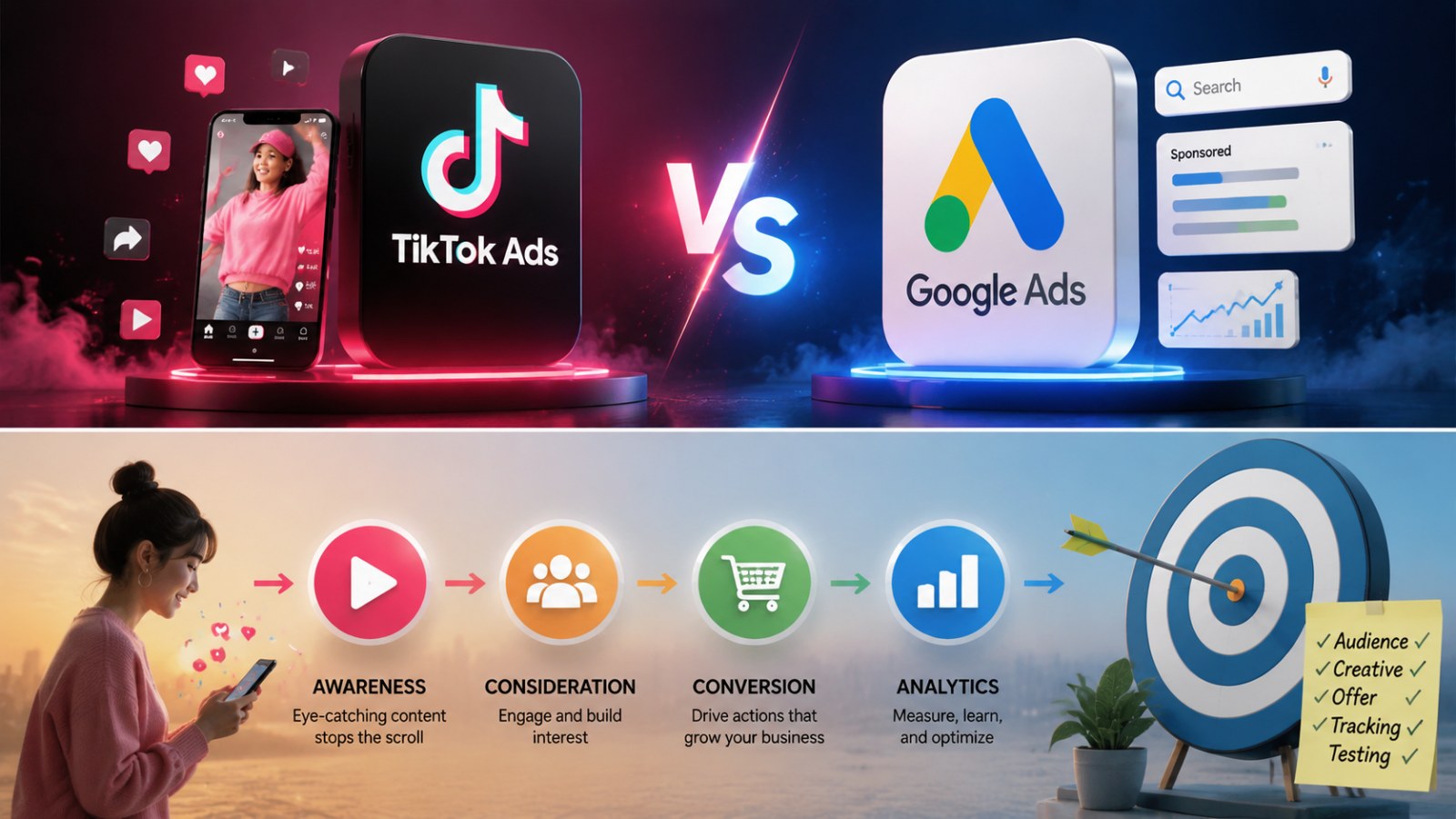
Yes, running campaigns on both platforms can complement each other. TikTok Ads builds awareness and engagement, while Google Ads captures high-intent searches and drives conversions.
Where can I learn more about TikTok Ads?
Official resources include TikTok For Business, TikTok Ads Manager, TikTok Business Help Center, and TikTok Creative Center.