TikTok Campaign Structure Explained: How Campaigns, Ad Groups, and Ads Actually Work
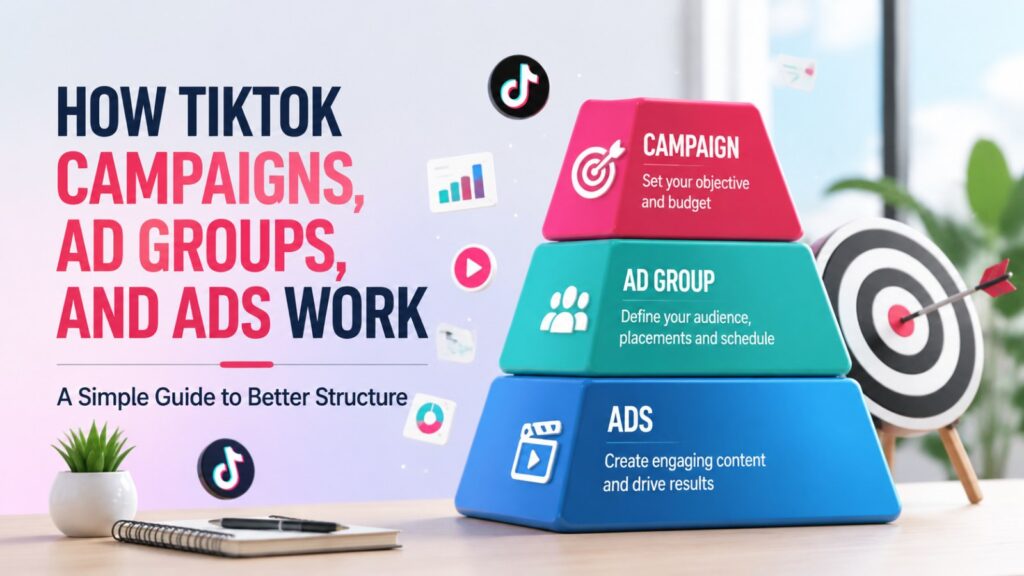
Understanding the TikTok Campaign Structure is essential for advertisers who want to maximize their results on the platform. TikTok organizes its advertising hierarchy into three key layers: campaigns, ad groups, and ads. Each layer has specific purposes and settings that impact performance, budget, and targeting.
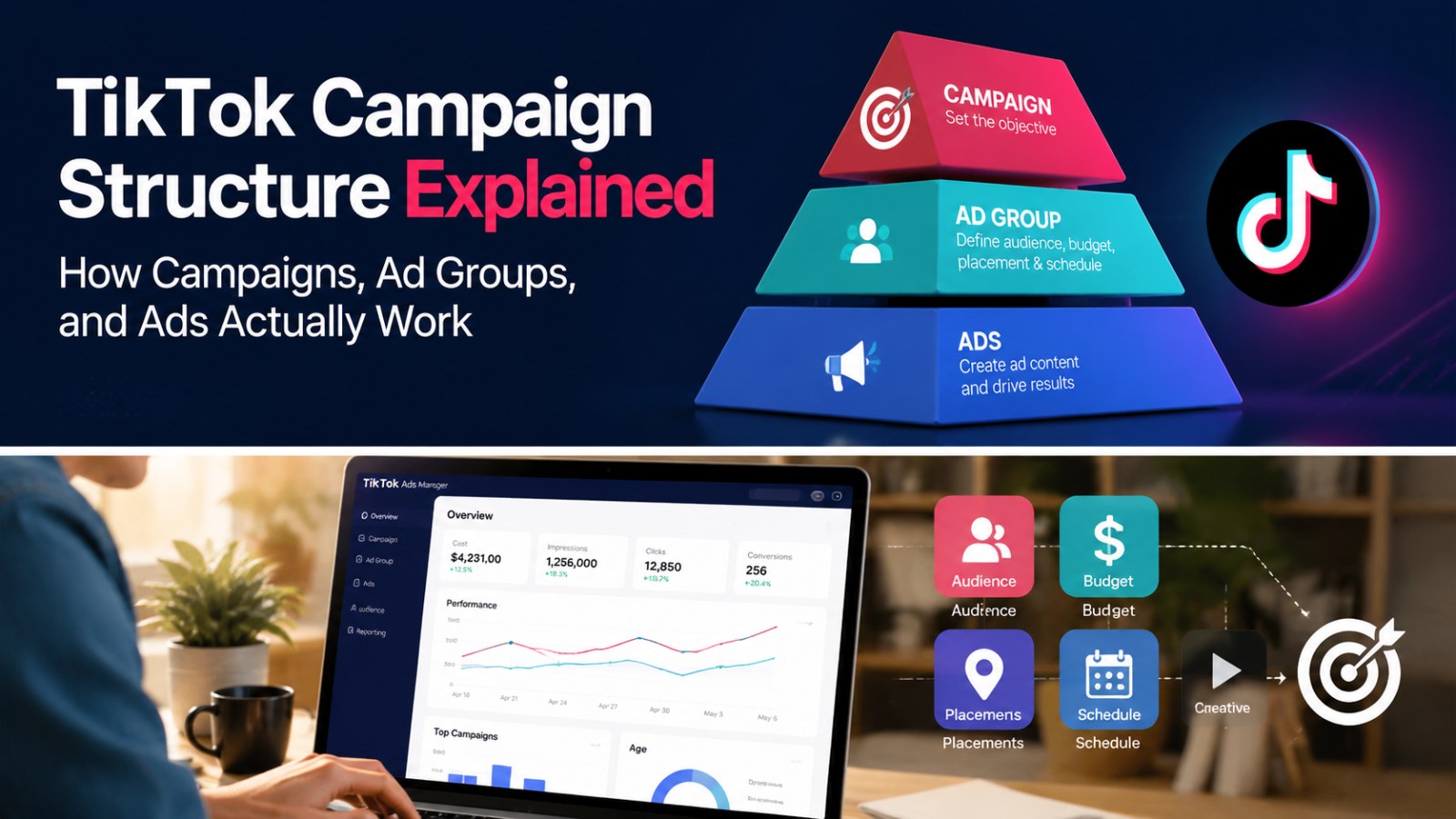
At the top of the hierarchy is the campaign level. A campaign defines your advertising objective, such as traffic, conversions, or app installs. The campaign objective guides TikTok’s optimization algorithms to show your ads to users most likely to take the desired action.
Within each campaign are one or more ad groups. Ad groups allow you to define targeting, placements, and budgeting details. Targeting includes audience demographics, interests, behaviors, and custom audiences. Placement settings determine where your ads appear on TikTok’s family of apps, while budget and schedule settings control daily or lifetime spend limits.
Finally, at the bottom layer are individual ads. Ads are the creative assets users will see, including images, videos, captions, and call-to-action buttons. Effective ads are engaging, relevant to your audience, and aligned with the campaign objective.
Proper understanding of this structure ensures that advertisers can manage multiple objectives efficiently while optimizing their campaigns for better ROI.
Campaign Level: Setting Objectives and Goals
The campaign level is where you select the overarching goal for your advertising. TikTok’s ad manager provides several objectives, such as:
- Awareness: Reach a broad audience to build brand recognition.
- Consideration: Drive traffic, engagement, or app downloads.
- Conversion: Optimize for purchases or specific actions on your website or app.
Choosing the right campaign objective is critical because it affects how TikTok delivers your ads and optimizes for performance. A mismatch between your business goal and campaign objective can lead to wasted budget and low returns.
For advertisers new to TikTok, understanding how campaigns work helps avoid common pitfalls. If you want to dive deeper, check out TikTok Ads Manager Explained for Beginners.
Ad Group Level: Targeting, Budget, and Placement
The ad group level is where advertisers define audience targeting, placements, and budget allocation. TikTok allows you to segment audiences by demographics such as age, gender, location, and interests. You can also use custom and lookalike audiences for more precision.
Budgeting can be set at either the daily or lifetime level, and TikTok offers bid strategies to maximize performance according to your campaign objective. Placement options include TikTok feeds, apps within TikTok’s ecosystem, or automatic placements, which let TikTok optimize delivery.
For step-by-step guidance, refer to How to Launch Your First TikTok Ads Campaign and use the TikTok Ads Launch Checklist to ensure all settings are correct.
Ad Level: Creative Assets and Best Practices
Ads are the creative elements users interact with. Effective ad creatives are visually engaging, relevant to the target audience, and aligned with the campaign objective. TikTok favors vertical videos, catchy captions, and clear calls to action.
Testing multiple ad variations within the same ad group allows advertisers to optimize for performance. Use TikTok’s A/B testing tools and analytics to monitor engagement, click-through rates, and conversions. Beginners may also benefit from reviewing TikTok Ads for Beginners for creative setup tips.
Optimization Tips for TikTok Campaign Structure
Understanding the TikTok Campaign Structure allows for better optimization across campaigns, ad groups, and ads. Key tips include:
- Start with clear objectives and choose the correct campaign goal.
- Segment audiences thoughtfully at the ad group level to prevent budget dilution.
- Test multiple creatives in each ad group to find top-performing ads.
- Use TikTok’s analytics to track performance and adjust targeting or creative assets accordingly.
- Leverage TikTok’s automatic placement options for broader reach if unsure about audience locations.
By following these strategies, advertisers can increase engagement, reduce wasted spend, and achieve better ROI. For more official guidance, explore the TikTok Ads Manager, TikTok Ads Help Center, TikTok Business Help Center, and TikTok For Business.
Mastering these layers ensures a more structured approach to advertising and enhances the ability to scale campaigns effectively.
Conclusion
Understanding the TikTok Campaign Structure—campaigns, ad groups, and ads—is critical for effective advertising. Each layer serves a specific purpose and allows advertisers to control objectives, targeting, budget, and creative delivery.
By planning campaigns strategically, segmenting audiences at the ad group level, and optimizing ads through testing and analytics, advertisers can achieve better engagement and conversion outcomes. Using the internal guides and official resources mentioned ensures that you are leveraging the platform efficiently and avoiding common mistakes.
Whether you are new to TikTok advertising or looking to scale your campaigns, mastering the TikTok Campaign Structure is a foundational skill that drives long-term success.
Meta Description: Learn how TikTok Campaign Structure works, including campaigns, ad groups, and ads, to optimize your advertising strategy effectively.